
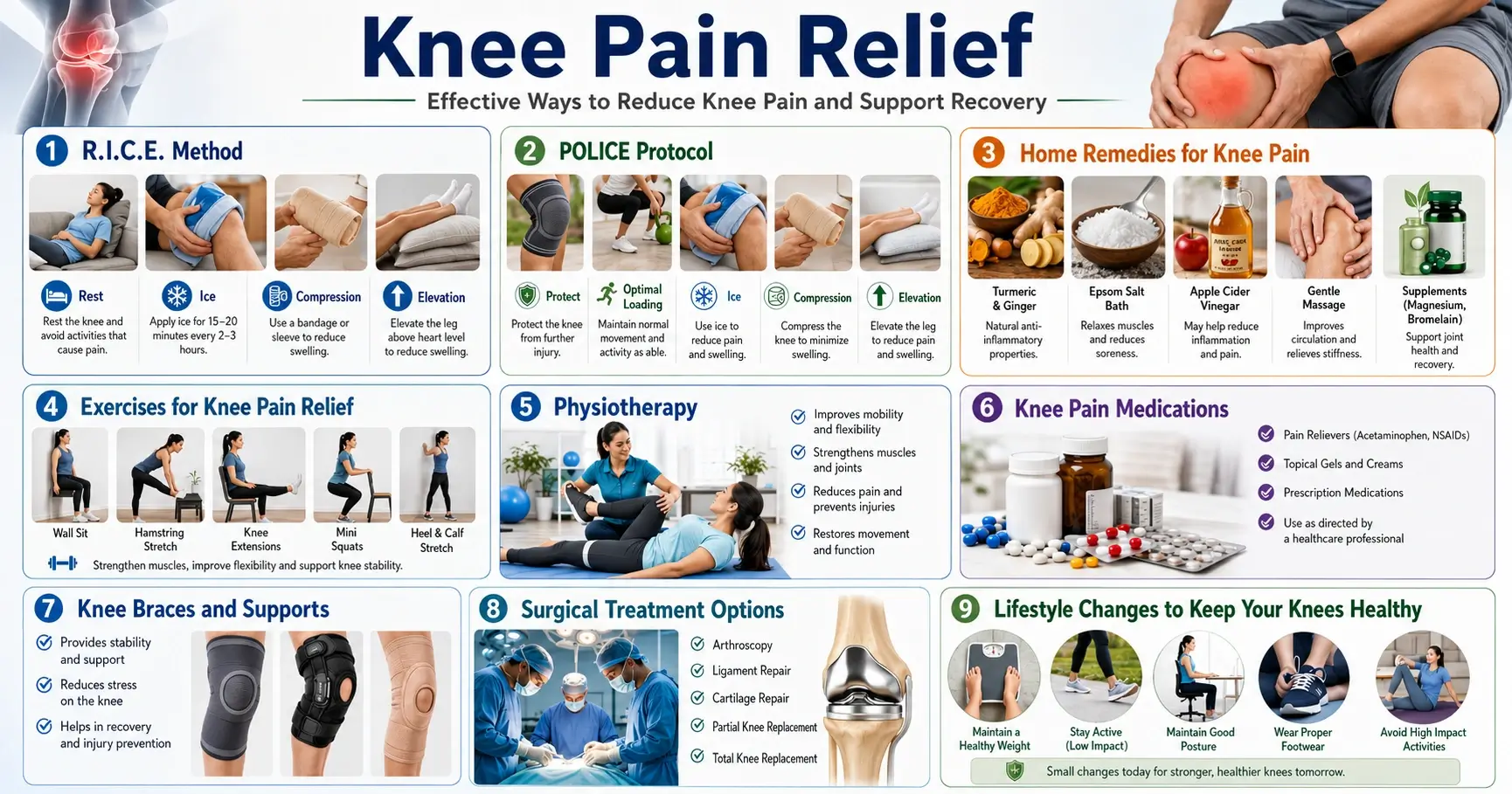
📅 Published on August 23, 2026 | 🕒 Last Reviewed & Updated on September 1, 2026
Knee pain is among the most common musculoskeletal complaints and can affect individuals of all ages. Whether caused by a sudden injury, repeated strain, or chronic conditions like osteoarthritis, it can significantly impact mobility and daily activities. Finding the right knee pain relief approach early can help reduce discomfort, improve movement, and prevent further joint damage. Since the knee bears much of the body’s weight and absorbs shock during walking, running, and climbing stairs, it is particularly susceptible to wear and injury.
Overview
Knee pain affects people of every age. It can arrive suddenly after an injury or a hard session of exercise, or begin as a niggle and build slowly over months.[1]
The knee is built from bone, cartilage, ligaments and joint fluid, with muscles and tendons driving movement. Trouble in any one of those structures can produce pain and make walking difficult.[3] Common causes include arthritis, bursitis, tendinitis, torn ligaments such as the anterior cruciate ligament (ACL) or medial collateral ligament (MCL), meniscus tears, a dislocated kneecap, fractures, iliotibial band syndrome, patellofemoral syndrome and Baker cyst. Less often — but importantly — infection in the joint or in the surrounding bone can be responsible.[1] Pain felt at the knee is sometimes referred from the hip or lower back, which is why a thorough examination looks beyond the knee itself.[4]
Symptoms depend on the cause. Pain, swelling, stiffness, and difficulty bending or walking are common complaints. Arthritis can also cause the joint to become red and feel warm.[1][4]
To work out what is going on, a clinician examines the knees, hips, legs and other joints, and may arrange X-rays or MRI, blood tests to exclude other conditions, or laboratory analysis of fluid drawn from the joint to check for infection or gout.[1][2]
One practical detail matters: when osteoarthritis is suspected, knee X-rays must be taken standing. Films taken lying down give a misleadingly generous impression of the joint space.[4]
Treatment follows the cause.[3] Mild problems usually settle with relative rest, ice, compression, elevation, simple pain relief and physiotherapy.[1] When damage becomes advanced and limits daily activities, doctors may recommend knee replacement as a reasonable option.[12][13]
Understanding Chronic Knee Pain
Pain lasting more than three months is considered chronic, while pain lasting one to three months is considered subacute.[7]
Osteoarthritis is the most frequently diagnosed form of arthritis and the commonest disease of the knee.[3][4] It is worth being accurate about what it actually is, because the popular description is wrong. NIAMS states that osteoarthritis “does not happen because of simple wear and tear on the joints.”[2]
What happens instead is biological: enzymes called matrix metalloproteases become overexpressed and break cartilage down faster than the cartilage cells can rebuild it. The tissue loses elasticity, then cracks and erodes.[4]
Osteoarthritis becomes more common with age, but aging alone does not inevitably cause the disease. In osteoarthritis, the body produces higher levels of degrading enzymes, whereas normal aging keeps these enzyme levels within the normal range.[4]
Who develops it – Risk factors are age, excess weight, a previous joint injury or operation, overuse from repeated movements, joints that did not form normally, and a family history.[2] Anyone can develop osteoarthritis, though it is more common in women, particularly after 50.[2]
Around 13% of women and 10% of men aged 60 or over have symptomatic knee osteoarthritis, rising towards 40% past 70 — although only a minority of people whose X-rays show changes actually have symptoms.[4]
What it feels like – Pain usually creeps in gradually and worsens with sustained activity, repeated bending or stairs. Morning stiffness typically lasts under 30 minutes, which helps distinguish it from inflammatory arthritis. There may be swelling after heavy use, a sense that the joint is loose, and in later stages pain that is worse at night.[2][4]
Grinding or scraping sounds on movement are common.[17] Persistent pain also takes a toll beyond the joint, contributing to fatigue, disturbed sleep and low mood.[2]
Other causes of long-standing knee pain include tendinitis, ligament injuries, meniscus tears and patellofemoral pain syndrome.[1][18]
Most people manage without surgery. The goals of treatment are to reduce symptoms, restore function, slow the disease and protect quality of life.[2]
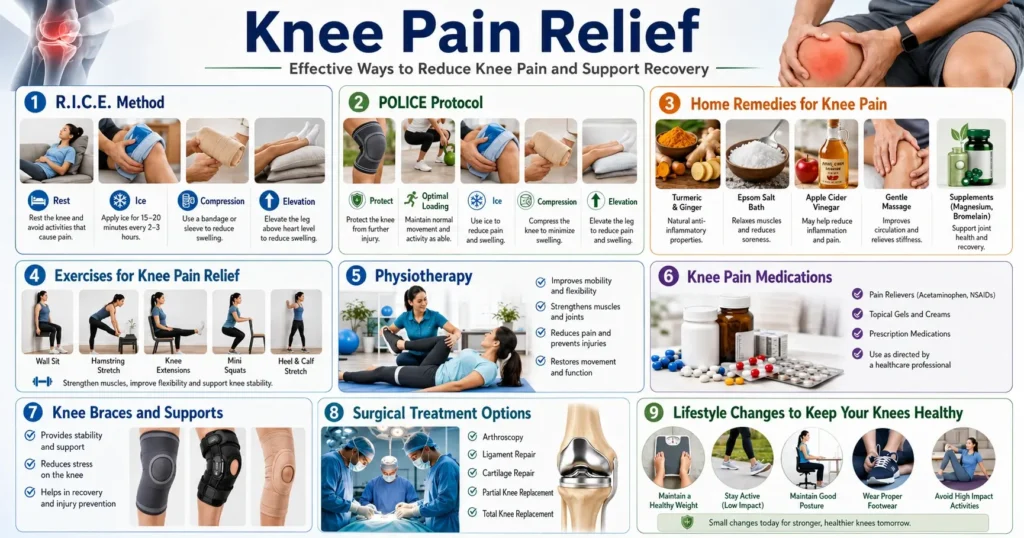
braces, medication and surgery.
First Aid for Sudden Knee Pain
1. R.I.C.E. Method
RICE — rest, ice, compression, elevation — remains standard first aid for minor soft-tissue injuries such as sprains and strains. It is widely recommended for controlling early pain and swelling, though the evidence behind each individual component is thin.[1][21]
Rest. Stop the activities that hurt.[1] Depending on the injury you may need to stay off the leg for a few days, sometimes using crutches. As pain settles, start moving gently again — prolonged immobilisation causes stiffness and muscle loss and can slow recovery.[21]
Ice. Apply for up to 15 minutes at a time, as often as once an hour on the first day, then at least four times daily afterwards.[1] Always put a towel between the ice and your skin, and never fall asleep with an ice pack in place, since prolonged contact can cause a cold injury.[1]
Compression. An elastic bandage or knee sleeve limits swelling and adds support.[1] It should feel snug, never tight enough to cause numbness, tingling, more pain or a change in skin colour.
Elevation. Keeping the leg raised helps fluid drain away from the joint. Aim for at or above heart level where you can, particularly in the first 48 hours. Sleeping with a pillow under or between the knees can also help.[1]
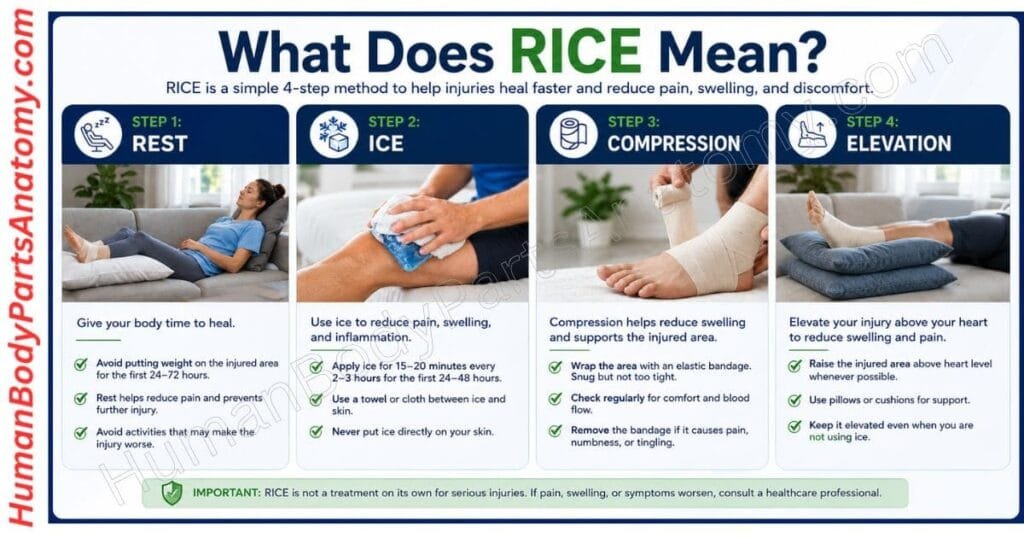
Read More – RICE Method For Injuries – Rest, Ice, Compression & Elevation
2. POLICE Protocol
For decades RICE was the default. In 2012, sports medicine researchers argued that clinicians had overstated the role of “rest” and proposed replacing it with optimal loading, creating the POLICE approach: protection, optimal loading, ice, compression, and elevation.[21]
Protection means shielding the joint early — a brace, a support, or crutches — while avoiding movements that aggravate it.[21]
Optimal loading means reintroducing controlled movement as soon as it is safe rather than immobilising the knee for days. The rationale is that controlled mechanical loading stimulates the cellular processes involved in tissue repair, whereas extended inactivity produces muscle weakness, stiffness and a slower return to normal function.[21]
In practice, begin with gentle range-of-motion work and progress to light strengthening as pain allows, stopping short of anything that provokes significant pain or swelling.
POLICE is best understood as a treatment framework grounded in a plausible physiological rationale, rather than as a protocol that trials have proven superior to RICE in head-to-head comparisons.[21]
Home Remedies for Knee Pain
Mild knee pain from overuse or a minor injury usually responds to rest, ice, elevation and a compression sleeve.[1]
Conditionally, doctors recommend applying heat or cold to manage knee osteoarthritis. When stiffness is the main problem rather than swelling, you can use a warm compress instead of ice.[19]
Several simple adjustments can reduce joint stress: warm up before exercising, stretch your quadriceps and hamstrings, walk downhill instead of running, replace running with swimming or cycling, choose smooth, soft surfaces instead of pavement, and wear properly fitted, well-cushioned shoes.[1]
Complementary approaches: what the guidelines actually say
Consumer articles tend to present every natural remedy as broadly helpful. The evidence is more discriminating, and in several cases points the other way.
| Approach | Guideline position for knee OA | Notes |
|---|---|---|
| Tai chi | Strongly recommended[15][19] | Among the best-supported non-drug options |
| Yoga | Conditionally recommended[15][19] | Extrapolated partly from the stronger tai chi evidence |
| Acupuncture | Conditionally recommended by ACR[15][19] | OARSI recommends against it; effects appear modest and possibly short-lived[15][22] |
| Topical capsaicin | Conditionally recommended[15][19] | Effect sizes small; OARSI does not recommend it[22] |
| Massage therapy | Conditionally recommended against[19] | NCCIH notes low-to-moderate quality evidence of benefit, but the guideline panel judged the supporting trials small and at risk of bias[15] |
| Glucosamine | Strongly recommended against[15][19] | Downgraded from a conditional recommendation over lack of efficacy and large placebo effects |
| Chondroitin, alone or with glucosamine | Strongly recommended against[19] | Industry-funded trials report markedly better results than publicly funded ones |
| Fish oil, vitamin D (as OA treatments) | Conditionally recommended against[19] | This concerns treating arthritis — it does not change vitamin D’s separate role in bone health[14] |
| Turmeric / curcumin | No guideline recommendation | Evidence inconclusive; products vary widely in curcumin content, and some highly absorbable formulations have been linked to liver injury[16] |
Epsom salt baths and bromelain from pineapple are frequently suggested online but are not supported by good-quality clinical evidence for knee pain. Whatever you take, tell your clinician — several supplements interact with prescription medicines — and do not use complementary approaches as a reason to delay assessment of a painful joint.[15]
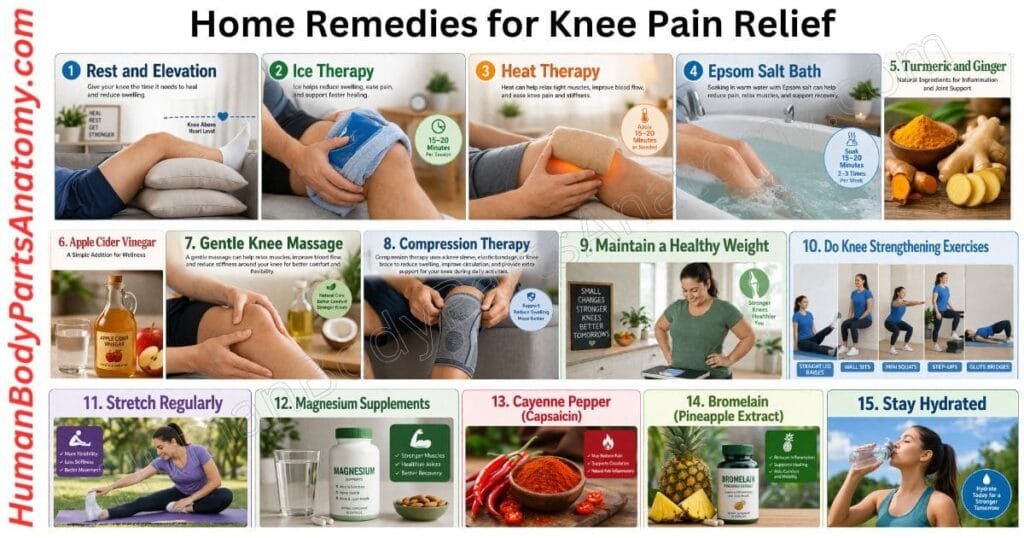
strongest evidence behind them.
Read More – 15 Effective Home Remedies for Knee Pain with Pictures That Actually Work
Exercises for Knee Pain Relief
Physical activity reduces joint pain and improves function and mood in people with arthritis.[6] Exercise is one of the few interventions that guidelines strongly recommend for knee osteoarthritis — among the highest ratings any knee treatment receives.[19]
A balanced programme works the quadriceps, hamstrings, calves, glutes and hip muscles, which together stabilise the knee and spread load across it. Stretching and range-of-motion work reduce stiffness; strengthening improves support and balance, making walking, stairs, standing and sitting more comfortable.[2]
Useful movements include quad sets, straight leg raises, mini squats, wall sits, calf raises, hamstring curls, heel slides, standing hamstring and calf stretches, and clamshells. Perform each slowly and with controlled form.
One caveat changes how people should approach this: the benefit fades. A combination of supervised sessions and a home programme produces the best results, but the gains are largely lost within about six months if the exercises stop.[4] This is maintenance, not a course of treatment.
Exercising safely
- Build towards at least 150 minutes a week of moderate activity plus muscle strengthening on two or more days. Sessions as short as five or ten minutes count towards the total.[6]
- Start slowly and give your body time to adapt to a new level of activity.[2]
- Pick weights or resistance bands that do not cause joint pain, and increase difficulty in small steps.[6]
- Some soreness, stiffness or swelling after starting something new is normal and should ease. If it does not, contact your provider.[6]
- Consider seeing a physical therapist when starting out.[6]
- Speak to your provider first if you are recovering from knee surgery or a serious injury, or have severe arthritis.[6]
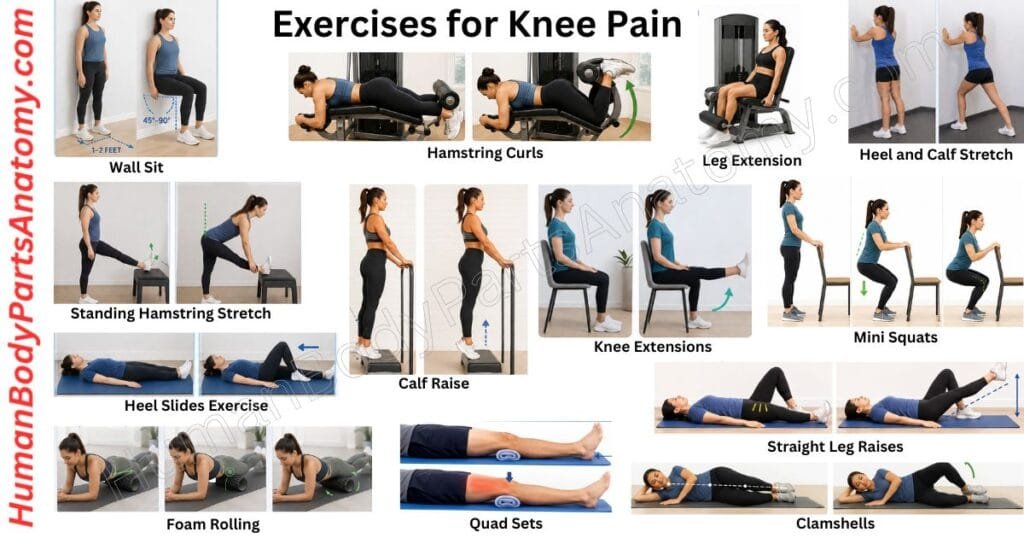
Read More – 13 Best Exercises for Knee Pain: Step-by-Step Guide with Images
Physiotherapy for Knee Pain
Exercise therapy is the core of knee rehabilitation and the component with the strongest evidence behind it.[4][19] A physical therapist builds a programme that may include quadriceps strengthening, resistance work, stretching, balance training and gait retraining.
Cryotherapy. Cold packs help most in the early stages after injury or surgery, where the demonstrated benefit is pain relief. Evidence that ice itself accelerates tissue healing is limited.[21]
Hydrotherapy. Water reduces load on the joint and makes movement more comfortable. Moderate-quality Cochrane evidence indicates aquatic exercise probably produces small improvements in pain and disability immediately after a course of up to 12 weeks.[25]
Manual therapy. Hands-on joint mobilization and soft-tissue techniques are widely used, but guidelines conditionally recommend against adding manual therapy to exercise for knee osteoarthritis because studies have not shown that it offers greater benefits than exercise alone.
[19]
Electrotherapy. TENS, interferential therapy, and therapeutic ultrasound commonly appear as knee treatment options. However, patients should know that guidelines strongly recommend against using TENS for knee osteoarthritis. The guideline panel found that the available trials were small, low quality, and showed no meaningful benefit.[19] None of these modalities should displace exercise therapy.
Knee Pain Medications
Speak to your provider before taking over-the-counter painkillers if you have other medical conditions, or if you have already been using them for more than a day or two.[1]
- Topical NSAIDs — start here
For knee osteoarthritis, clinicians strongly recommend topical NSAIDs and often consider them before oral NSAIDs because they deliver the medication directly to the joint with much less systemic exposure.[19]
Diclofenac sodium 1% gel is available over the counter in the United States. Doctors recommend applying it to no more than two body areas at a time—for example, both knees or one knee and one ankle—four times daily for up to 21 days, unless a doctor advises otherwise.[8]
Use the dosing card supplied in the pack. Prescription-strength topical diclofenac solutions are also available specifically for knee osteoarthritis.[8]
Two points people often miss. The over-the-counter gel is licensed for arthritis pain in accessible joints, not for strains, sprains or bruises.[8] And topical does not mean risk-free: NSAID warnings about heart attack and stroke apply to the topical form too, and anyone who has recently had a heart attack should not use it without medical advice.[8]
Oral NSAIDs
| Medicine | Dose | Daily OTC limit |
|---|---|---|
| Ibuprofen (Advil, Motrin) | 200–400 mg every 4–6 hours | 1,200 mg |
| Naproxen sodium (Aleve) | 220–440 mg every 8–12 hours | 660 mg |
Higher regimens exist only as prescriptions taken under supervision.[5] Where oral NSAIDs are needed, guidelines advise the lowest effective dose for the shortest time.[19]
Cardiovascular risk. The FDA has strengthened labelling warning that non-aspirin NSAIDs raise the risk of heart attack and stroke. That risk can begin within the first weeks of use, may grow with longer use, appears greater at higher doses, and is not confined to people who already have heart disease — although their risk is higher.
NSAID use also increases the risk of heart failure, and ibuprofen and naproxen can interfere with the protective effect of low-dose aspirin.[9]
Other risks. NSAIDs can damage the stomach lining, particularly in anyone with a history of peptic ulcer, and can raise blood pressure, impair kidney function, disturb fluid and electrolyte balance and, less commonly, injure the liver.[5] Because non-selective NSAIDs reduce platelet function, caution is needed with bleeding disorders or before surgery.[9][5]
Among the NSAIDs, diclofenac carries the highest reported rates of both cardiovascular events and liver toxicity.[5]
Who should not take them. Product labelling lists contraindications including NSAID or salicylate hypersensitivity, a previous allergic reaction such as hives or asthma after taking an NSAID, recent coronary artery bypass graft surgery, the third trimester of pregnancy, and renal failure.[5] Long-term users may need periodic blood count, kidney and liver monitoring.[5]
Side effects. Upset stomach, heartburn, bloating, constipation or diarrhoea, dizziness, drowsiness and ringing in the ears are common.[5] Seek medical attention immediately for chest pain, breathlessness, weakness on one side of the body or slurred speech.[9]
- Acetaminophen (paracetamol)
Acetaminophen relieves pain and lowers fever but does not reduce inflammation, so it will not help swelling.[1] It is conditionally recommended for osteoarthritis and is better suited to short-term use than as long-term monotherapy.[19]
Dosing. Maximum single dose 1,000 mg. The FDA advises that total intake from all sources should not exceed 4,000 mg in 24 hours for adults and children aged 12 and over.[11] Some manufacturers have voluntarily lowered the labelled ceiling for their own products to 3,000 mg, so follow the Drug Facts label on the pack you are using.
Liver safety. Too much acetaminophen can cause liver damage severe enough to require a transplant or cause death.[10] The commonest route to accidental overdose is doubling up, because acetaminophen is hidden in many cold, flu and combination prescription painkillers — check every label.[11][10]
Severe liver damage can occur with three or more alcoholic drinks a day, and people with liver disease may safely tolerate less than the labelled maximum.[10][11]
In pregnancy. In September 2025 the FDA issued a safety communication describing a possible association between acetaminophen use in pregnancy and neurodevelopmental conditions including autism spectrum disorder and ADHD.
No evidence to date shows that acetaminophen causes these conditions, but the association has been reported in some studies. Discuss the balance of risks with your doctor.[10]
- Prescription medications
If over-the-counter options fail, a doctor may prescribe higher-dose ibuprofen or naproxen, diclofenac, celecoxib or etoricoxib. These carry the same class risks — gastrointestinal bleeding, ulceration, cardiovascular events and kidney injury — and the risks are greater than with occasional over-the-counter use because doses are higher and treatment is often daily.[5][9]
- Knee injections
Corticosteroid (cortisone) injections.Injected corticosteroids reduce inflammation in the joint while limiting systemic steroid exposure. The ACR strongly recommends them for knee osteoarthritis, making them the best-supported injectable option.[19] No single limit exists on how many injections you can receive, and clinicians vary in their recommendations.
They are not risk-free. In a two-year randomised trial, people who received a corticosteroid injection every 12 weeks lost significantly more cartilage volume and gained no significant pain benefit compared with placebo injections.[23]
This is why clinicians use injections alongside exercise and weight management instead of as a standalone long-term strategy. If you plan to undergo knee replacement, avoid injections during the three months before surgery because they can increase the risk of prosthetic joint infection.[31]
Possible side effects include a temporary flare of pain and swelling, skin discolouration at the site, raised blood sugar, and a small risk of joint infection.[4]
Hyaluronic acid injections. Usually given as a course of one to five injections intended to supplement joint fluid. The evidence is inconsistent. The ACR conditionally recommends against consistent use for knee osteoarthritis,[19] and the AAOS states that hyaluronic acid injection is not recommended for routine use in symptomatic knee osteoarthritis.[20]
Some preparations are derived from avian cells, which matters if you have a bird allergy.[4] Side effects include injection-site pain, muscle aches, difficulty walking, fever, chills and headache.[4]
Platelet-rich plasma (PRP) and stem cell injections. These treatments are heavily marketed, but the guideline position remains unambiguous. The ACR strongly recommends against PRP and stem cell injections for knee and hip osteoarthritis because clinicians cannot reliably determine what they are injecting due to poorly standardized preparations and techniques.[19] OARSI reaches the same strong conclusion.[22]
Consistent with that, a randomised placebo-controlled trial found PRP produced no improvement in knee pain and no reduction in cartilage loss at 12 months compared with saline.[24]
Knee Braces and Supports
A knee brace is a medical support device designed to stabilize your knee joint, improve alignment, and protect it from excessive movement. Healthcare providers often recommend knee braces after an injury, during recovery from surgery, or to help manage chronic knee conditions such as arthritis. Knee braces are also known as knee orthoses.
Depending on your condition, a knee brace can reduce pain, improve stability, support healing, and help you move more comfortably during daily activities or sports.
Types of Knee Supports
Knee supports come in different styles, each designed for a specific purpose. Choosing the right one depends on your condition, activity level, and your healthcare provider’s recommendation.
1. Unloader Knee Braces – Unloader (tibiofemoral) braces shift load away from the damaged side of the joint and suit osteoarthritis affecting predominantly one compartment, such as with a bow-legged or knock-kneed deformity.[4]
Tibiofemoral bracing carries a strong ACR recommendation for tibiofemoral knee osteoarthritis.[19] Worth knowing: guidelines are not unanimous here — a systematic review of practice guidelines found other bodies have recommended against valgus unloader braces specifically, so individual fit and clinical judgement matter.[22]
2. Patellofemoral Knee Braces – Patellofemoral knee braces support the kneecap (patella) and the front of the knee. They help keep the kneecap properly aligned while you move, making them useful for people with patellofemoral pain syndrome, kneecap instability, or mild tracking problems. They may reduce pain during activities such as climbing stairs, squatting, or running.[18][19]
3. Knee Immobilizer Braces – Knee immobilisers hold the knee straight after certain surgeries, fractures, ligament injuries and severe sprains, sometimes as a long-leg splint or a hinged brace locked in extension while allowing early weight-bearing.[4] Use should be time-limited, since prolonged immobilisation causes stiffness and weakness.[21]
4. Functional Knee Braces -Functional knee braces provide support while allowing controlled movement. They are commonly used during recovery from injuries involving the ACL, PCL, MCL, or LCL ligaments. These braces improve knee stability, reduce the risk of excessive movement, and help people safely return to everyday activities or sports after rehabilitation.
5. Prophylactic Knee Braces – Prophylactic knee braces are designed to help reduce the risk of knee injuries during sports and other high-impact activities. They are frequently worn by athletes participating in contact sports such as football, rugby, wrestling, and hockey.
While they may provide additional support, they cannot completely prevent injuries. It is best to consult a healthcare provider or sports medicine specialist before using one.
6. Knee Sleeves -Knee sleeves are made from flexible, elastic, or compression materials that fit snugly around the knee. Although they are not true knee braces, they are one of the most commonly used knee supports.
Compression sleeves provide mild support, improve joint awareness, help reduce minor swelling, and keep the knee warm during physical activity. They are often used for mild knee pain, arthritis, exercise, or recovery after workouts.[1]
A note on shoes and insoles. Comfortable, well-fitting, well-cushioned shoes are sound general advice, and arch supports may help if you have flat feet.[1]
For knee osteoarthritis specifically, however, the ACR conditionally recommends against modified shoes and against lateral or medial wedged insoles, because the available studies have not demonstrated clear benefit.[19] Comfort is a reasonable basis for choosing footwear; treating osteoarthritis is not.
Surgical Treatment Options
Surgery becomes reasonable when rest, physiotherapy, medication and injections no longer control the pain.[3][4]
1. Knee arthroscopy. A minimally invasive procedure using small incisions, a camera and specialised instruments to repair cartilage, remove loose fragments, address certain meniscus tears and clarify a diagnosis. Recovery is generally quicker than with open surgery.
Arthroscopy is not appropriate for every meniscus tear. For degenerative tears in middle-aged and older adults, exercise-based physiotherapy has proved non-inferior to arthroscopic partial meniscectomy for knee function over five years,[26] and ten-year follow-up of a placebo-surgery-controlled trial found no benefit from the operation along with signs of possible harm.[27]
Exercise therapy is therefore the preferred first-line treatment for degenerative tears. Traumatic tears in younger, active patients are a different clinical situation and are assessed individually.
2. ACL reconstruction. Restores a torn anterior cruciate ligament using a graft. A torn ligament may cause bleeding into the joint, swelling and an unstable knee.[1]
Ligament injuries of this kind typically follow a sudden or unnatural twisting movement.[1] Reconstruction is often recommended for athletes and active people who want to return to demanding activity safely.
3. Meniscus repair. Where the tear pattern allows, surgeons repair the meniscus rather than remove tissue. The rationale is preservation: both previous trauma and previous surgery to the knee are recognised causes of secondary osteoarthritis, so removing tissue is not a consequence-free option.[4] Suitability depends on the location, size, type and cause of the tear.
4. MPFL reconstruction. The medial patellofemoral ligament is the main structure that prevents the kneecap from sliding sideways during the first 30 degrees of knee flexion, and dislocation damages it in up to 94% of knees. About 44% of people who receive nonsurgical treatment experience another dislocation, which is why doctors often recommend reconstruction for recurrent dislocation and chronic instability.[28]
5. Total knee replacement. Considered for osteoarthritis affecting more than one compartment where non-surgical treatment has failed.[4][12] Damaged bone and cartilage are resurfaced with metal and plastic components.[13]
Most people do well; complications such as infection, blood clots, loosening of the implant and nerve or blood vessel injury are uncommon and usually treatable.[12] Typical recovery involves a one- to two-night hospital stay, driving again at roughly four to six weeks, and returning to work somewhere between four and ten weeks depending on the job.[4]
One detail worth planning around: the strongest predictor of how well the knee bends after surgery is how well it bent before, which is an argument for physiotherapy in advance rather than only afterwards.[12][4]
For younger patients with single-compartment disease and malalignment, high tibial osteotomy or partial knee replacement may be alternatives.[4]
6. Robotic-assisted knee replacement. Robotic systems help plan the operation and place the implant precisely. A meta-analysis of 21 randomised trials involving 2,692 patients found robotic assistance produced significantly more accurate mechanical alignment than conventional technique — fewer alignment outliers and less deviation from the neutral axis.
However, there was no significant difference in patient-reported function on the WOMAC or Oxford Knee Scores, and operating time averaged about 20 minutes longer (mean difference 19.94 minutes).
Knee Society Scores were marginally higher after robotic surgery, but by roughly one point on a 100-point scale — statistically significant and clinically negligible. Whether better alignment translates into longer implant survival has not been established.[29]
Lifestyle Changes to Keep Your Knees Healthy
Your knees support your body every time you walk, run, climb stairs, or stand. Since they are among the hardest-working joints, they are also more likely to develop pain, injuries, or arthritis over time. Fortunately, healthy daily habits can help protect your knees, improve mobility, and reduce the risk of long-term joint problems.
1. Stay active. Regular activity strengthens the muscles supporting the joint and helps it work better.[3] Favour low-impact options — walking, swimming, cycling, yoga, strength training — and build up gradually.[6]
2. Manage your weight. Extra weight loads the knee: each excess pound adds roughly five pounds of pressure on the kneecap going up and down stairs, and more when jumping.[1] For people with knee osteoarthritis who are overweight, losing at least 5% of body weight is strongly recommended, best achieved through dietary change combined with low-impact aerobic exercise.[4][19]
3. Protect the knee from injury. Warm up properly, use safe lifting technique, and wear the right protective equipment for your sport.
4. Treat injuries early using the first-aid steps above, and seek care if you meet any of the warning signs.[1]
5. Don’t ignore persistent pain. Worsening or long-standing knee pain may signal an injury or joint condition where earlier treatment prevents further damage.[1]
6. Stop smoking. Smoking impairs healing of bone and soft tissue. In a meta-analysis of 122 studies covering more than 400,000 patients, the rate of fracture nonunion was significantly higher among smokers, who also had higher rates of deep surgical site infection. Stopping at least four weeks before surgery was associated with fewer postoperative wound infections.[30]
7. Eat a balanced diet. No particular diet has been shown to treat knee osteoarthritis, but balanced eating supports the weight management that guidelines do strongly recommend.[19]
8. Mind your posture. Standing and sitting in good alignment is widely advised to reduce unnecessary load on the knees, hips and back, though this is general ergonomic guidance rather than a guideline-backed osteoarthritis treatment.
9. Choose comfortable footwear that fits well and cushions your stride, with arch support if you have flat feet.[1]
10. Look after your bones. Calcium and vitamin D are both essential for bone strength, with requirements varying by age and sex.[14] Note the distinction drawn above: vitamin D supports bone health, but taking it as a treatment for osteoarthritis is conditionally recommended against.[19]
FAQ’s –
NSAIDs are strongly recommended for knee osteoarthritis and should be tried before oral tablets.[19] Diclofenac sodium 1% gel is available over the counter, applied to up to two body areas four times a day for up to 21 days.[8] Topical capsaicin is also conditionally recommended for the knee, though trial effect sizes were small.[15][19] The diclofenac gel is licensed for arthritis pain, not for strains, sprains or bruises.[8]
No. Physical activity reduces joint pain and improves function and mood in people with arthritis, and exercise is one of the few strongly recommended treatments.[6][19] Some soreness or swelling when starting something new is normal and should settle; if it does not, contact your provider.[6] Choose low-impact activities and increase difficulty in small steps.
If knee arthritis is affecting your walking, stability or pain day to day, yes — cane use is strongly recommended, one of the few non-drug measures to earn that rating.[19] A walking aid reduces load on the affected joint and helps you stay more active. It is not a sign of giving in.
No. There are no proven disease-modifying treatments for knee osteoarthritis, and no medication has been shown to reverse cartilage loss.[4][19] Treatment aims to control pain, maintain function and slow the impact of the disease — which is why exercise, weight management and appropriate pain relief form the foundation of care.[2] Claims that a supplement or injection can rebuild cartilage are not supported by current guidelines.
References –
- U.S. National Library of Medicine, NIH. Knee pain. MedlinePlus Medical Encyclopedia. Reviewed 7 November 2024. https://medlineplus.gov/ency/article/003187.htm
- National Institute of Arthritis and Musculoskeletal and Skin Diseases (NIAMS), NIH. Osteoarthritis. https://www.niams.nih.gov/health-topics/osteoarthritis
- U.S. National Library of Medicine, NIH; content source NIAMS. Knee Injuries and Disorders. MedlinePlus. https://medlineplus.gov/kneeinjuriesanddisorders.html
- Hsu H, Siwiec RM. Knee Osteoarthritis. StatPearls [Internet]. NCBI Bookshelf, National Library of Medicine. Updated 26 June 2023. PMID: 29939661. Bookshelf ID: NBK507884. https://www.ncbi.nlm.nih.gov/books/NBK507884/
- Ghlichloo I, Gerriets V. Nonsteroidal Anti-Inflammatory Drugs (NSAIDs). StatPearls [Internet]. NCBI Bookshelf, National Library of Medicine. Updated 1 May 2023. PMID: 31613522. Bookshelf ID: NBK547742. https://www.ncbi.nlm.nih.gov/books/NBK547742/
- Centers for Disease Control and Prevention. About Physical Activity and Arthritis. https://www.cdc.gov/arthritis/prevention/index.html
- Dowell D, Ragan KR, Jones CM, Baldwin GT, Chou R. CDC Clinical Practice Guideline for Prescribing Opioids for Pain — United States, 2022. MMWR Recomm Rep. 2022;71(3):1–95. PMID: 36327391. DOI: 10.15585/mmwr.rr7103a1. https://www.cdc.gov/mmwr/volumes/71/rr/rr7103a1.htm
- U.S. National Library of Medicine, NIH. Diclofenac Topical (arthritis pain). MedlinePlus Drug Information. https://medlineplus.gov/druginfo/meds/a611002.html
- U.S. Food and Drug Administration. FDA Drug Safety Communication: FDA strengthens warning that non-aspirin nonsteroidal anti-inflammatory drugs (NSAIDs) can cause heart attacks or strokes. https://www.fda.gov/drugs/drug-safety-and-availability/fda-drug-safety-communication-fda-strengthens-warning-non-aspirin-nonsteroidal-anti-inflammatory
- U.S. National Library of Medicine, NIH. Acetaminophen. MedlinePlus Drug Information. https://medlineplus.gov/druginfo/meds/a681004.html
- U.S. Food and Drug Administration. Acetaminophen (Safe Use of Over-the-Counter Pain Relievers and Fever Reducers). https://www.fda.gov/drugs/safe-use-over-counter-pain-relievers-and-fever-reducers/acetaminophen
- NIAMS, NIH. Joint Replacement Surgery: Health Information Basics for You and Your Family. https://www.niams.nih.gov/community-outreach-initiative/understanding-joint-health/joint-replacement-surgery
- U.S. National Library of Medicine, NIH. Knee Replacement. MedlinePlus. https://medlineplus.gov/kneereplacement.html
- NIAMS, NIH. Calcium and Vitamin D: Important for Bone Health. https://www.niams.nih.gov/health-topics/calcium-and-vitamin-d-important-bone-health
- National Center for Complementary and Integrative Health (NCCIH), NIH. Arthritis and Complementary Health Approaches: What the Science Says. https://nccih.nih.gov/health/providers/digest/arthritis-and-complementary-health-approaches-science
- NCCIH, NIH. Turmeric: Usefulness and Safety. https://www.nccih.nih.gov/health/turmeric
- National Institute on Aging (NIA), NIH. Osteoarthritis. https://www.nia.nih.gov/health/osteoarthritis/osteoarthritis
- U.S. National Library of Medicine, NIH. Anterior knee pain. MedlinePlus Medical Encyclopedia. https://medlineplus.gov/ency/article/000452.htm
- Kolasinski SL, Neogi T, Hochberg MC, et al. 2019 American College of Rheumatology/Arthritis Foundation Guideline for the Management of Osteoarthritis of the Hand, Hip, and Knee. Arthritis Care Res (Hoboken). 2020;72(2):149–162. PMID: 31908149. DOI: 10.1002/acr.24131. https://pubmed.ncbi.nlm.nih.gov/31908149/
- Brophy RH, Fillingham YA. AAOS Clinical Practice Guideline Summary: Management of Osteoarthritis of the Knee (Nonarthroplasty), Third Edition. J Am Acad Orthop Surg. 2022;30(9):e721–e729. PMID: 35383651. DOI: 10.5435/JAAOS-D-21-01233. https://pubmed.ncbi.nlm.nih.gov/35383651/
- Bleakley CM, Glasgow P, MacAuley DC. PRICE needs updating, should we call the POLICE? Br J Sports Med. 2012;46(4):220–221. PMID: 21903616. DOI: 10.1136/bjsports-2011-090297. https://pubmed.ncbi.nlm.nih.gov/21903616/
- Osteoarthritis Research Society International. OARSI guidelines for the non-surgical management of knee, hip, and polyarticular osteoarthritis. Osteoarthritis and Cartilage. 2019. https://www.oarsijournal.com/article/S1063-4584(19)31116-1/fulltext
- McAlindon TE, LaValley MP, Harvey WF, et al. Effect of Intra-articular Triamcinolone vs Saline on Knee Cartilage Volume and Pain in Patients With Knee Osteoarthritis: A Randomized Clinical Trial. JAMA. 2017;317(19):1967–1975. PMID: 28510679. DOI: 10.1001/jama.2017.5283. https://pubmed.ncbi.nlm.nih.gov/28510679/
- Bennell KL, Paterson KL, Metcalf BR, et al. Effect of Intra-articular Platelet-Rich Plasma vs Placebo Injection on Pain and Medial Tibial Cartilage Volume in Patients With Knee Osteoarthritis: The RESTORE Randomized Clinical Trial. JAMA. 2021;326(20):2021–2030. PMID: 34812863. DOI: 10.1001/jama.2021.19415. https://pubmed.ncbi.nlm.nih.gov/34812863/
- Bartels EM, Juhl CB, Christensen R, et al. Aquatic exercise for the treatment of knee and hip osteoarthritis. Cochrane Database Syst Rev. 2016;3(3):CD005523. PMID: 27007113. DOI: 10.1002/14651858.CD005523.pub3. https://pubmed.ncbi.nlm.nih.gov/27007113/
- Noorduyn JCA, van de Graaf VA, Willigenburg NW, et al. Effect of Physical Therapy vs Arthroscopic Partial Meniscectomy in People With Degenerative Meniscal Tears: Five-Year Follow-up of the ESCAPE Randomized Clinical Trial. JAMA Netw Open. 2022;5(7):e2220394. PMID: 35802374. DOI: 10.1001/jamanetworkopen.2022.20394. https://pubmed.ncbi.nlm.nih.gov/35802374/
- Kalske R, Sihvonen R, Paavola M, et al.; FIDELITY Investigators. Arthroscopic Partial Meniscectomy for Degenerative Tear — 10-Year Outcomes. N Engl J Med. 2026;394(17):1757–1759. PMID: 42054686. DOI: 10.1056/NEJMc2516079. https://pubmed.ncbi.nlm.nih.gov/42054686/
- Migliorini F, Trivellas A, Colarossi G, Eschweiler J, Tingart M, Rath B. Single- versus double-bundle patellar graft insertion for isolated MPFL reconstruction in patients with patellofemoral instability: a systematic review of the literature. Arch Orthop Trauma Surg. 2020;140(6):769–776. PMID: 32086557. DOI: 10.1007/s00402-020-03376-9. https://pubmed.ncbi.nlm.nih.gov/32086557/
- Mostafa O, Malik M, Qayum K, et al. Robotic-assisted versus conventional total knee arthroplasty: a systematic review and meta-analysis of alignment accuracy and clinical outcomes. Ann Med Surg. 2025;87(2):867–879. PMID: 40110313. DOI: 10.1097/MS9.0000000000002919. https://pubmed.ncbi.nlm.nih.gov/40110313/
- Xu B, Anderson DB, Park E-S, Chen L, Lee JH. The influence of smoking and alcohol on bone healing: systematic review and meta-analysis of non-pathological fractures. EClinicalMedicine. 2021;42:101179. PMCID: PMC8571530. DOI: 10.1016/j.eclinm.2021.101179. https://www.ncbi.nlm.nih.gov/pmc/articles/PMC8571530/
- Intra-articular glucocorticoid injections for knee osteoarthritis. CMAJ. 2026;198(3):E88. https://www.cmaj.ca/content/198/3/E88
Read More-
Pain Management –
- Lower Back Pain: An Overview of Types, Risk Factors, and When to Seek Medical Care
- Lower Back Pain in Women: Why It Affects Women Differently — Causes, Symptoms, Treatment & Prevention
- Lower Back Pain Treatments: Effective Relief Options, Tests & Expert Tips
- Lower Back Pain Causes & Symptoms: Common Reasons & Risk Factors
- RICE Method For Injuries – Rest, Ice, Compression & Elevation
- 13 Best Exercises for Knee Pain: Step-by-Step Guide with Images
- 15 Effective Home Remedies for Knee Pain with Pictures That Actually Work
Diagnostic Testing –
- PET Scan vs CT Scan: What’s the Difference and Which One Do You Need?
- CT Scan vs. MRI Scan: Key Differences, Uses, and Which One You Need
- What is Magnetic Resonance Angiography (MRA): Uses, Types & Risks
- MRA vs MRI: Key Differences, Uses, and Which Scan You Need
Medical Disclaimer
All content on HumanBodyPartsAnatomy.com is educational and based on verified, peer-reviewed medical sources. Articles are authored or reviewed by qualified medical or biomedical professionals to ensure accuracy.
This website does not provide medical advice, diagnosis, or treatment. Always consult a licensed healthcare professional for personal medical guidance.
No commercial or promotional interests influence the medical content published on this site.