
📅 Published on August 15, 2026 | 🕒 Last Reviewed & Updated on October 1, 2026
Overview of Home Remedies for Knee Pain
Knee pain is one of the most common joint problems, affecting people of all ages.[1] While it becomes more common with aging, it can also result from sports injuries, overuse, excess body weight, arthritis, muscle weakness, or previous joint injury.[3][1] Knee pain can range from mild discomfort to severe pain, making it difficult to walk, climb stairs, exercise, or perform daily activities.[1]
The good news is that many cases of knee pain can be managed with simple home remedies. Rest, ice therapy, gentle stretching, strengthening exercises, and weight management may help reduce pain, improve flexibility, and support the body’s natural healing process.[1][3] However, persistent or severe knee pain should be evaluated by a healthcare professional to identify the underlying cause and determine the most appropriate treatment.[1]
In this guide, you’ll discover home remedies for knee pain, learn what the evidence shows for each, and understand when it’s time to seek medical care. Whether your knee pain is caused by arthritis, an injury, overuse, or general joint wear, these practical tips can help you find relief, improve mobility, and get back to your daily routine.
Understanding Knee Pain
Knee pain can feel different from person to person. Some people experience a mild, aching discomfort, while others have sharp pain, stiffness, swelling, or difficulty bending the knee. The symptoms often depend on the underlying cause.[1]
Below are some of the most common causes of knee pain:
Osteoarthritis
Osteoarthritis is the most common disease affecting the knee.[2] It develops when the tissues in the joint break down over time, damaging the protective cartilage that cushions the joint.[3]
Notably, this breakdown does not result from simple wear and tear on the joints; instead, changes in joint tissue trigger it, which usually occurs gradually over time.[2][3] As the cartilage breaks down, the bones may rub against each other, causing pain, stiffness, swelling, and reduced mobility.[3]
Osteoarthritis becomes more common as people age, and women are more likely than men to develop it, especially after age 50.[3] Younger people can also develop it, usually due to a prior joint injury or a problem with how the joint formed.[3]
Knee Injuries
Sudden injuries can damage the structures inside the knee, including the ligaments, tendons, cartilage, or bones. Common injuries include ACL tears, meniscus tears, sprains, dislocations, and fractures.[1] A torn ACL, most often caused by a sudden twisting motion, may cause bleeding into the knee, swelling, or an unstable knee.[2] Prompt medical evaluation is recommended after a significant knee injury.[1]
Overuse and Repetitive Stress
Repeated activities such as running, jumping, kneeling, squatting, or standing for long periods can place extra stress on the knee joint.[1]
Osteoarthritis is more common among adults whose jobs require repeated knee bending, squatting, and other repetitive motions.[10] Over time, this repetitive strain may lead to inflammation, soreness, and chronic knee pain, especially in athletes and people with physically demanding jobs.
Bursitis
Small fluid-filled sacs called bursae sit near bony prominences and between bones, muscles, tendons, and ligaments, where they reduce friction between these structures.[8] When these sacs become inflamed, a condition known as bursitis develops, often from repeated pressure on the knee such as prolonged kneeling.[1]
This can cause swelling, tenderness, warmth, and pain, particularly when kneeling or moving the knee.[8] A bursa can also become infected, which is less common but more serious and requires prompt treatment.[8]
Tendonitis
Tendonitis occurs when the tendons connecting muscles to the knee become irritated or inflamed, often with a change in activity, overuse, or deconditioned tissue.[1] Pain is usually felt during physical activity and may worsen with continued use; it often improves with a change in activity, exercise therapy, and NSAIDs, and surgery is rarely needed.[6]
Other Medical Conditions
Several other health conditions can also cause knee pain, including:
- Gout, which occurs when uric acid builds up in the fluid around the joints and forms crystals, making the joint inflamed, painful, swollen, and warm.[5]
- Rheumatoid arthritis, an autoimmune disease in which immune cells inflame the synovium, the inner lining of the joint, eventually destroying cartilage and bone.[4]
- knee infections, which may cause intense joint pain, redness and swelling, chills, and fever, and which require urgent medical assessment.[7]
- Patellar tracking problems, where the kneecap moves out of its normal position.[6]
- Excess body weight, which puts more stress on weight-bearing joints, raises the risk of knee osteoarthritis, and can make existing knee or hip osteoarthritis pain worse.[10]
Why Understanding the Cause Matters
Finding the underlying cause of your knee pain is the first step toward effective treatment, because treatment of knee problems depends on the cause.[2] While many home remedies for knee pain can help reduce discomfort, swelling, and stiffness, the best treatment depends on what’s causing the problem. Mild pain often improves with rest, ice therapy, gentle exercise, and healthy lifestyle habits, while more serious conditions may require physical therapy, medication, or medical treatment.[1][3]
In the following sections, you’ll learn about safe, effective home remedies for knee pain that can help improve mobility, reduce inflammation, and support long-term joint health.
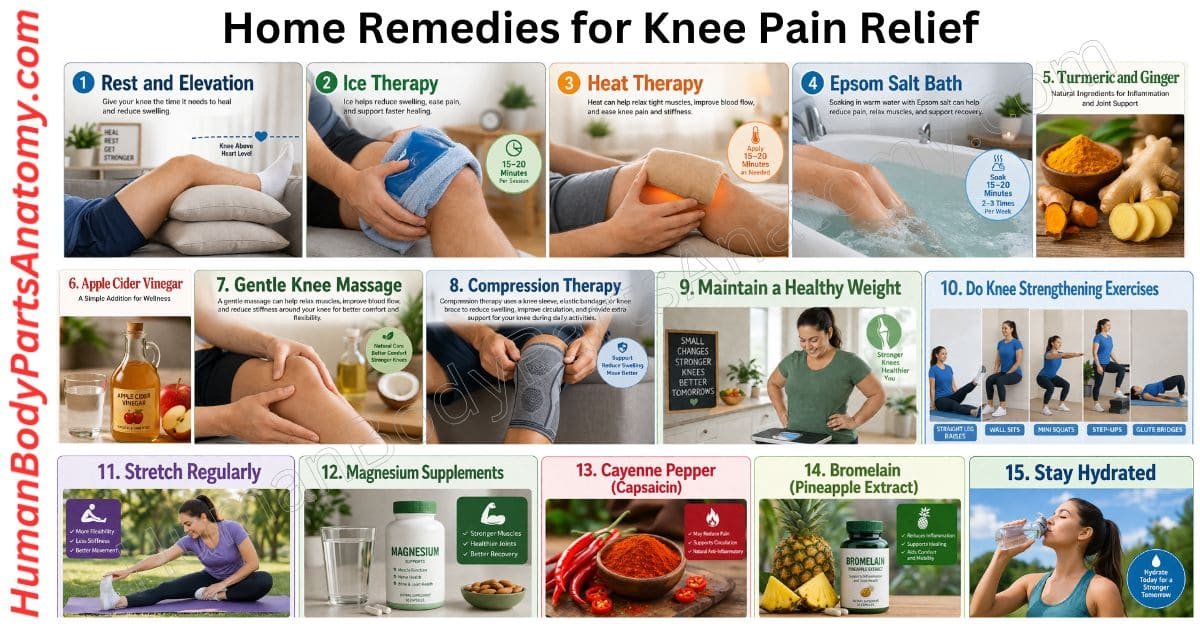
Home Remedy for Knee Pain Pictures
strongest evidence behind them.
Home Remedy for Knee Pain
- Rest and Elevation
- Ice Therapy
- Heat Therapy
- Epsom Salt Bath
- Turmeric and Ginger
- Apple Cider Vinegar
- Gentle knee Massage
- Compression Therapy
- Maintain a Healthy Weight
- Do knee Strengthening Exercises
- Stretch Regularly
- Magnesium Supplements
- Cayenne Pepper
- Bromelain (Pineapple Extract)
- Stay Hydrated
15 Home Remedies for Knee Pain Relief
If you have mild knee pain caused by overuse, muscle strain, or minor injuries, simple home treatments can often help reduce discomfort and improve mobility. Simple causes of knee pain often clear up on their own while you take steps to manage your symptoms.[1]
You should see a healthcare provider if your knee pain is severe, lasts for several days, or is accompanied by significant swelling, redness, fever, or difficulty walking.[1]
It’s worth knowing that the evidence behind these measures is not equal. Exercise and weight loss carry strong recommendations in current osteoarthritis treatment guidelines, while heat, cold, and topical capsaicin carry weaker conditional recommendations and several popular remedies have little supporting evidence.[19] Whatever you try at home, don’t use it to postpone seeing a healthcare provider about joint symptoms.[14]
Here are some of the most commonly used home remedies for knee pain you can try.
1. Rest and Elevation
Resting your knee is one of the first steps to help reduce pain and support healing. If your knee hurts, avoid activities that put extra stress on the joint, such as running, jumping, squatting, or lifting heavy objects, and avoid putting weight on the knee.[1] Taking a short break from these activities gives the injured tissues time to recover and helps prevent further damage.
Keeping your leg elevated can also help reduce swelling.[1] While sitting or lying down, place pillows under your calf and ankle so your knee is slightly above the level of your heart. Sleeping with a pillow underneath or between your knees may also help.[1]
How it helps:
- Reduces swelling.[1]
- Prevents additional strain on the knee joint.[1]
- Supports the body’s natural healing process.
- May improve comfort and reduce throbbing pain.
Tip: Rest is important, but avoid staying completely inactive for long periods. Adults with arthritis should move more and sit less throughout the day, and any physical activity is better than none.[9]
As your pain improves, start gentle movements and light stretching to help prevent stiffness and maintain knee flexibility. If walking is painful, a cane or walker can help you move around safely, provide stability, and lower pain.[3]
2. Ice Therapy
Ice therapy is one of the easiest and most widely used home remedies for knee pain, especially after a minor injury, sprain, or intense physical activity. Cold therapy is among the measures recognized as able to lower joint pain.[3]
Wrap an ice pack, a bag of frozen vegetables, or a cold gel pack in a thin towel before placing it on your knee. For knee pain that has just started and is not severe, apply ice every hour for up to 15 minutes on the first day, then at least four times per day after the first day.[1]
How it helps:
- Reduces swelling.[1]
- Provides temporary pain relief by numbing the area.
- Cold therapy can lower joint pain in osteoarthritis.[3]
Tip: Never place ice directly on your skin, and do not fall asleep while using ice — leaving it on too long can cause frostbite.[1] If swelling continues for several days, or if your pain becomes severe, consult a healthcare professional. Contact a provider if you still have pain after three days of home treatment.[1]
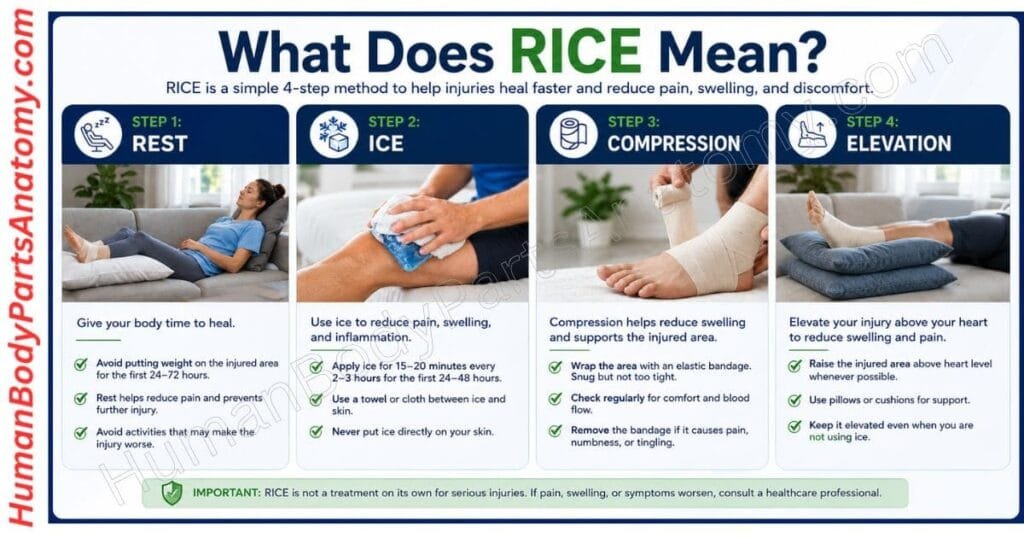
Read More – RICE Method For Injuries – Rest, Ice, Compression & Elevation
3. Heat Therapy
It is a commonly used home remedy for chronic knee pain, muscle tightness, and joint stiffness caused by conditions like osteoarthritis. Heat and cold therapies can both help lower joint pain,[3] though thermal treatments carry only a conditional recommendation in current osteoarthritis guidelines, meaning they are a reasonable option but the supporting evidence is not strong.[19]
You can use a heating pad, warm compress, heated wrap, or take a warm bath or shower. Apply heat to the affected knee for 15 to 20 minutes before stretching, walking, or doing gentle exercises.
Benefits of heat therapy:
- Relaxes tight muscles around the knee.
- Increases local blood flow.
- Reduces joint stiffness.[3]
- Improves flexibility and range of motion.
- Makes movement more comfortable before physical activity.
Helpful Tip: Heat works best for long-term or recurring knee pain. Do not use heat if your knee is swollen, feels hot to the touch, or was recently injured. Redness, warmth, or significant swelling around the knee are reasons to contact a healthcare provider, because they can indicate infection.[1] In those situations, cold therapy is usually the better choice early on.
4. Epsom Salt Bath
Soaking in a warm bath may help ease mild muscle soreness and stiffness after a long day or physical activity. The warm water helps relax muscles, and many people find the soak comforting.
However, the common claim that magnesium from Epsom salt is absorbed through the skin is not supported by the evidence. A review of the research on transdermal magnesium concluded that its promotion is scientifically unsupported and that the authors could not recommend it, noting that the primary function of skin is to act as a barrier, so its absorptive capacity for substances from the outside is very limited.[22]
To use it, add 1 to 2 cups of Epsom salt to a tub of warm water and soak for 15 to 20 minutes. Treat this as a comfort measure rather than a treatment.
Benefits of an Epsom salt bath:
- Warmth may help relax sore and tight muscles.
- Encourages relaxation and stress relief.
- Can improve comfort after physical activity.
Helpful Tip: Avoid an Epsom salt bath if you have open wounds, skin infections, severe swelling, or your healthcare provider has advised against soaking. If your knee pain is severe, persistent, or accompanied by significant swelling or fever, seek medical evaluation instead of relying only on home remedies.[1]
5. Turmeric and Ginger
Ginger & turmeric are two of the most popular natural remedies for joint pain and inflammation. Turmeric contains curcumin, and ginger contains plant compounds called gingerols.[12][13] However, the National Center for Complementary and Integrative Health states that we do not know enough to definitively conclude whether turmeric or curcumin is beneficial for any health purpose.[12]
Ginger supplements might be helpful for symptoms of knee osteoarthritis, but much of the research has been of poor quality, and ginger applied to the skin has not been shown to help knee osteoarthritis symptoms.[13] They are not a cure for knee pain, but they can be a healthy addition to your daily diet.
You can enjoy turmeric and ginger in herbal tea, soups, curries, smoothies, or other meals. They are also available as dietary supplements. However, if you take blood thinners, have gallbladder disease, or have another medical condition, talk to your healthcare provider before using supplements regularly.
Important safety notes:
- Highly bioavailable formulations of curcumin, which are designed to increase absorption, may harm your liver.[12]
- Ginger can cause abdominal discomfort, heartburn, diarrhea, and mouth and throat irritation when taken orally.[13]
- Dietary supplements may interact with medications or other supplements and may contain ingredients not listed on the label. The FDA has warned the public about several dietary supplements promoted for arthritis or pain that were found to be tainted with prescription drugs.[14]
Tip: Curcumin is absorbed better when combined with black pepper, which contains piperine.[12] Note that the products designed to boost absorption are the same ones associated with reports of liver injury, so discuss them with your provider first.
6. Apple Cider Vinegar
Apple cider vinegar (ACV) is a common home remedy that some people use for knee pain. However, there is no authoritative evidence showing that it relieves joint pain or treats arthritis.
If you want to try it, mix 1 tablespoon of apple cider vinegar with a full glass of water. Never drink it undiluted. Dental experts note that regularly drinking apple cider vinegar can degrade tooth enamel, leading to pain and increased risk of tooth decay, and that it is known to cause esophageal ulceration and burning, gastroparesis, and low potassium levels in some cases; they recommend using it in cooking rather than drinking it.[18] People who still choose to drink it are advised to dilute it with water, use a straw, swish water in the mouth afterward, and wait an hour before brushing.[18]
Potential Benefits:
- Can be part of a balanced diet.
- Some people report temporary relief, although research does not support this.
Tip: Apple cider vinegar is not a proven treatment for knee pain and should never replace medical care, prescribed medications, physical therapy, or other treatments recommended by your healthcare provider. If your knee pain is severe, lasts for several weeks, or is accompanied by swelling, redness, or difficulty walking, seek medical evaluation.[1]
7. Gentle Knee Massage
A gentle knee massage may help relax tight muscles, improve blood flow, and reduce stiffness around the knee joint. In a randomized clinical trial of 222 adults with knee osteoarthritis comparing whole-body massage with light-touch control and usual care, participants improved on several knee pain measures during the initial eight weeks of weekly massage, but by 52 weeks biweekly maintenance massage was no better than usual care.[23] Massage is therefore best understood as short-term relief rather than a lasting fix.
Instead of pressing directly on the kneecap, gently massage the muscles surrounding the knee, including the front of the thigh (quadriceps), back of the thigh (hamstrings), and calf muscles. Loosening these muscles may help reduce tension on the knee and improve comfort.
You can use a small amount of coconut oil or olive oil to help your hands glide smoothly over the skin. Some people also find diluted essential oils, such as lavender or eucalyptus, soothing, but they should always be mixed with a carrier oil before use to avoid skin irritation.
Benefits of a Gentle Knee Massage
- May improve blood circulation around the knee.
- Helps relax tight muscles that support the knee.
- Can reduce stiffness and improve flexibility.
- May ease mild knee discomfort during a course of regular sessions.[23]
- Helps reduce stress, which may contribute to muscle tension.
Tip: Massage should never be painful. Avoid massaging your knee if you have severe swelling, redness, an open wound, signs of infection, or a suspected fracture.[1] If your pain gets worse during or after a massage, stop and talk to a healthcare professional.
8. Compression Therapy
Compression therapy is a simple home treatment that can help manage mild knee pain and swelling. Wearing an elastic bandage or elastic sleeve may help reduce swelling and provide support.[1]
Evidence for knee sleeves suggests that they decrease pain in knee osteoarthritis, although a benefit for disability has not been demonstrated and the overall evidence for bracing is modest.[24] For people with tibiofemoral knee osteoarthritis, current guidelines make a strong recommendation for tibiofemoral bracing.[19]
Compression is often helpful after a minor knee injury, mild sprain, or after exercise. It can also make walking and standing feel more comfortable by giving the knee added stability.
Choose a knee sleeve or bandage that fits comfortably. It should feel snug but should not be so tight that it causes numbness, tingling, skin discoloration, or increased pain. Remove or loosen the compression if these symptoms occur.
Benefits of Compression Therapy
- May help reduce mild swelling.[1]
- Provides additional stability and joint support.[24]
- Can make walking and everyday activities more comfortable.
- May help with recovery from minor knee injuries and overuse.
Tip: Compression works best when combined with rest, ice, elevation, and gentle movement when appropriate. Be aware that thrombophlebitis of the lower limbs has been reported with knee braces, so seek medical advice if you develop calf pain, swelling, or discoloration.[24] If knee swelling is severe, lasts for several days, or is accompanied by intense pain, fever, or difficulty putting weight on your leg, seek medical evaluation promptly.[1]
9. Maintain a Healthy Weight
Keeping a healthy weight is one of the most effective ways to reduce knee pain and protect your joints. Weight loss is strongly recommended for people with knee or hip osteoarthritis who are overweight or obese.[19] Extra weight puts more stress on weight-bearing joints, makes knee osteoarthritis more likely, and can make existing knee or hip osteoarthritis pain worse.[10]
Even losing a small amount of weight can make a noticeable difference. In a study of 142 overweight and obese older adults with knee osteoarthritis, each pound of weight lost was associated with roughly a four-fold reduction in the load exerted on the knee per step during daily activities.[21]
Eating a balanced diet and staying active with low-impact exercises, such as walking, swimming, or cycling, can help you lose weight safely while supporting joint health.[9]
Benefits of maintaining a healthy weight:
- Reduces stress and pressure on the knee joint.[21]
- Helps relieve pain caused by osteoarthritis.[19]
- Improves mobility, flexibility, and daily movement.[3]
- Lowers the risk of developing knee osteoarthritis.[10]
- Supports better overall joint and long-term health.
10. Do Knee Strengthening Exercises
Strengthening the muscles around your knees helps improve stability and reduces pressure on the joint. Exercise is strongly recommended for knee osteoarthritis in current treatment guidelines,[19] and exercising can lower joint pain and stiffness and increase flexibility and muscle strength.[3]
A 2024 Cochrane review of 139 trials involving 12,468 participants found that exercise probably improves pain, physical function, and quality of life in the short term, although the size of these benefits was of uncertain clinical importance.[20]
Simple exercises such as straight leg raises, wall sits, mini squats, hamstring curls, step-ups, and glute bridges can help build strength without putting too much strain on your knees. Start with a few repetitions and gradually increase the number as your strength improves. Focus on using proper form rather than doing more repetitions.
Choose weights or resistance bands that do not cause joint pain.[9] If an exercise causes sharp or severe pain, stop immediately and talk to a healthcare provider or physical therapist.[3]
For the best results, perform knee-strengthening exercises at least 2 days per week and combine them with at least 150 minutes per week of moderate-intensity aerobic activity to improve flexibility, balance, and overall joint function.[9]
Benefits of knee strengthening exercises:
- Builds muscle support around the knee joint.
- Reduces stress on the knees during daily activities.
- Improves balance, stability, and flexibility.[3]
- Lowers the risk of future knee injuries.
- Helps improve movement and overall knee function.[20]
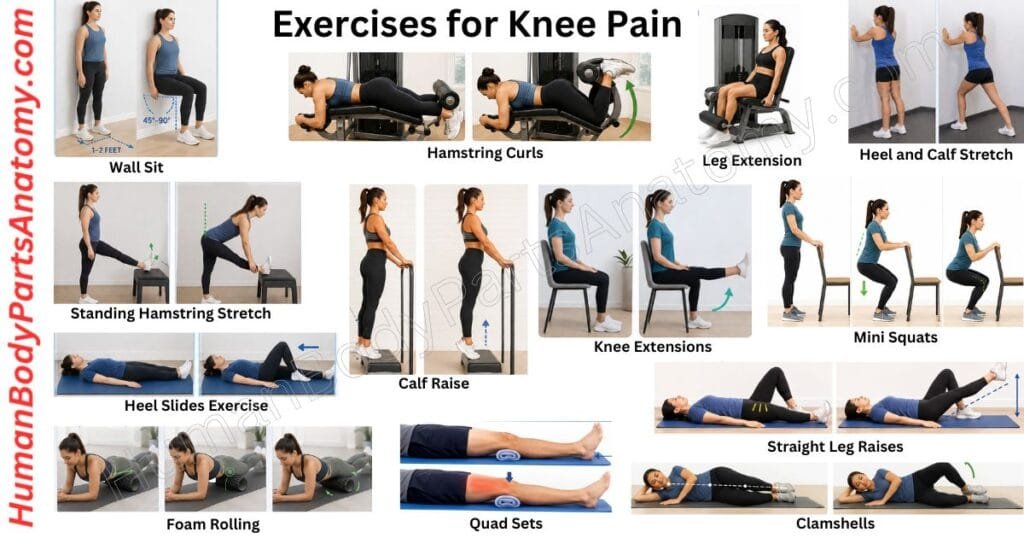
Read More – 13 Best Exercises for Knee Pain: Step-by-Step Guide with Images
11. Stretch Regularly
Regular stretching helps keep the muscles, tendons, and ligaments around your knee flexible. Good flexibility reduces stiffness, improves movement, and helps your knee handle everyday activities like walking, climbing stairs, and exercising. Tight muscles in your thighs, calves, or hips can put extra stress on your knee joint and make pain worse.
Always warm up before exercising and cool down afterward, and stretch the quadriceps at the front of the thigh and the hamstrings at the back.[1] Warm up with 5 to 10 minutes of light walking or another gentle activity to increase blood flow to your muscles.
Hold each stretch for 20 to 30 seconds, breathe normally, and avoid bouncing. You should feel a gentle stretch, not pain. Stretching both legs, even if only one knee hurts, can help improve balance and mobility.
Benefits of regular stretching:
- Improves flexibility and range of motion.[3]
- Reduces muscle tightness around the knee.
- Helps relieve knee stiffness.
- Supports better posture and body alignment.
- May lower stress on the knee joint during daily activities.
12. Magnesium Supplements
Magnesium is a nutrient the body needs to stay healthy, and it is important for many processes including regulating muscle and nerve function and making protein and bone.[15] Extreme magnesium deficiency can cause numbness, tingling, muscle cramps, seizures, personality changes, and an abnormal heart rhythm.[15]
Many people can get enough magnesium through a healthy diet. Good food sources include legumes, nuts, seeds, whole grains, and green leafy vegetables such as spinach.[15]
Magnesium is not a treatment for knee pain, and no authoritative body recommends it for knee osteoarthritis or knee injury. It works best as part of an overall healthy lifestyle that includes regular exercise, stretching, and a balanced diet.
Benefits of magnesium:
- Supports healthy muscle and nerve function.[15]
- Helps maintain strong bones; people with higher magnesium intakes have higher bone mineral density.[15]
- Contributes to overall health.
Safety note: Magnesium naturally present in food is not harmful, because healthy kidneys clear any excess in the urine.[15]
Magnesium from supplements and medications is different: adults should not exceed 350 mg per day from these sources unless a healthcare provider recommends it, since high intakes can cause diarrhea, nausea, and abdominal cramping, and extremely high intakes can lead to irregular heartbeat and cardiac arrest.[15] Because it is the kidneys that clear excess magnesium, anyone with reduced kidney function should speak with a provider first.
Magnesium can also interfere with bisphosphonates, antibiotics, diuretics, and prescription acid-reflux drugs, so tell your provider about any supplements you take.[15]
13. Cayenne Pepper (Capsaicin)
Cayenne pepper contains capsaicin, a natural compound used topically for joint and muscle pain, and it is a common ingredient in over-the-counter creams, gels, and patches.
The evidence is mixed. Topical capsaicin is conditionally recommended for people with knee osteoarthritis in current treatment guidelines, meaning it is a reasonable option for some patients rather than a broadly recommended one.[19]
However, a 2013 evaluation of topical herbal products for osteoarthritis concluded that capsicum extract gel probably is not helpful, and it has been reported that such products can cause skin irritation or other side effects.[14] Expect modest results at best.
While some people make homemade remedies by mixing cayenne pepper with a carrier oil like coconut or olive oil, commercial capsaicin creams are usually a safer choice because they contain a measured amount of capsaicin and are designed for skin use.
When using capsaicin products, apply them only to healthy, unbroken skin. Wash your hands thoroughly after application and avoid touching your eyes, nose, or mouth, as capsaicin can cause a burning sensation. Mild warmth or tingling on the skin is common and often decreases with regular use.
Benefits of cayenne pepper (capsaicin):
- May provide modest, temporary relief from knee pain for some people.[19]
- Available in easy-to-use creams, gels, and patches.
14. Bromelain (Pineapple Extract)
Bromelain is a natural enzyme found in fresh pineapple, especially in the stem and fruit. It is often promoted for inflammation and joint pain, but it does not appear among the recommended therapies in current osteoarthritis treatment guidelines, and no U.S. federal health agency endorses it for knee pain.[19]
Eating fresh pineapple provides bromelain along with vitamin C, antioxidants, and other nutrients that support overall health. Bromelain is also available as a dietary supplement. Talk to your healthcare provider before taking bromelain supplements, especially if you use blood thinners, have a bleeding disorder, or are scheduled for surgery.
Bear in mind that supplements may interact with medications and may contain ingredients not listed on the label, and that the FDA has warned the public about arthritis and pain supplements found to be tainted with prescription drugs.[14]
Bromelain should be used as part of an overall healthy lifestyle and is not a replacement for medical treatment if you have severe or persistent knee pain.[1]
Benefits of bromelain:
- Provides antioxidants and nutrients as part of fresh pineapple.
- Works alongside a healthy diet to support overall health.
15. Stay Hydrated
Drinking enough water every day supports overall health. Cartilage, the protective tissue that cushions your knee joint, does contain a large amount of water: the extracellular matrix makes up approximately 65% to 80% of the total mass of cartilage and is composed of water, type II collagen, and proteoglycan.[16]
Synovial fluid, produced as an ultrafiltrate of blood plasma, acts as a lubricant for articular cartilage and as a nutrient source for surrounding structures.[17]
However, there is no evidence that drinking extra water relieves knee pain or increases joint lubrication in a person who is already adequately hydrated.
Cartilage water content is regulated by the tissue matrix and mechanical loading rather than by how much you drink, so hydration is best treated as general health maintenance rather than a knee treatment.
To stay hydrated, drink water regularly throughout the day instead of waiting until you feel thirsty. If you’re exercising, spending time outdoors in hot weather, or sweating heavily, consider replacing lost electrolytes with a low-sugar electrolyte drink or electrolyte-rich foods.
Benefits of staying hydrated:
- Supports overall health and normal body function.
- Helps replace fluid lost through sweating during exercise or hot weather.
When Should You See an Orthopedic Specialist for Knee Pain?
Many cases of knee pain improve with rest, ice, gentle stretching, and other home treatments.[1] However, some symptoms may indicate a more serious condition that requires medical care. Knowing when to see a specialist can help prevent further damage and speed up recovery.
You should schedule an appointment with a doctor if you experience any of the following:[1]
- Severe or ongoing knee pain: If your pain lasts for several days, keeps getting worse, or doesn’t improve with rest and home care, it may be caused by an underlying injury or medical condition. Contact a provider if you still have pain after three days of home treatment.
- Persistent or significant swelling: Swelling that doesn’t go away within a few days or develops suddenly after an injury could be a sign of ligament damage, a meniscus tear, arthritis, or fluid buildup inside the knee.
- Knee instability or deformity: If your knee feels like it may “give out,” buckles or locks when you walk, or looks misshapen, you may have damaged ligaments, tendons, or bones that require prompt evaluation.
- Difficulty bending, straightening, or putting weight on the knee: Limited range of motion or trouble walking may indicate a serious injury that should not be ignored.
- Redness, warmth, or fever: These symptoms may suggest a joint infection, which requires urgent treatment.[7]
- Pain, swelling, numbness, tingling, or bluish discoloration in the calf below the sore knee: these symptoms need prompt medical attention.
- A popping sound during an injury: Hearing or feeling a pop followed by pain, swelling, or instability can be a sign of a torn ligament, such as an ACL injury.[2]
A specialist will perform a physical examination and may recommend imaging tests, such as X-rays or an MRI, to identify the exact cause of your knee pain; joint fluid may also be drawn and examined.[1]
Based on the diagnosis, your treatment plan may include physical therapy, pain-relieving medications, anti-inflammatory treatments, knee braces, or corticosteroid injections.[1][19]
Note that current treatment guidelines strongly recommend against platelet-rich plasma and stem cell injections for knee osteoarthritis, and conditionally recommend against intra-articular hyaluronic acid injections for the knee, because these treatments have not demonstrated adequate benefit.[19]
If non-surgical treatments fail to provide lasting relief, knee surgery may be recommended, and in some cases a doctor may recommend knee replacement.[2]
Finding Long-Term Relief from Knee Pain
Knee pain affects people of all ages and can interfere with everyday activities, work, and exercise.[1] The good news is that many cases can be managed successfully with the right combination of home care, lifestyle changes, and medical treatment when needed.
Simple steps such as resting the knee, applying ice or heat, maintaining a healthy weight, and performing strengthening exercises can help reduce pain and improve joint health.[1][3][19]
Staying active with low-impact exercises like walking, swimming, or cycling can also strengthen the muscles that support the knee, and these activities carry a low risk of injury because they do not twist or place excessive stress on the joints.[9][11]
If your knee pain continues despite home treatment or starts affecting your daily life, don’t delay seeking professional care. The earlier you receive a diagnosis, the sooner you can begin treatment to lessen its effects and prevent or delay it from getting worse.[11]
With the right care and a proactive approach, you can manage knee pain effectively, protect your joints, and maintain an active, healthy lifestyle for years to come.
References –
- U.S. National Library of Medicine, MedlinePlus Medical Encyclopedia. Knee pain. Review date 7 November 2024. https://medlineplus.gov/ency/article/003187.htm
- NIAMS / U.S. National Library of Medicine, MedlinePlus. Knee Injuries and Disorders. https://medlineplus.gov/kneeinjuriesanddisorders.html
- National Institute of Arthritis and Musculoskeletal and Skin Diseases (NIAMS), NIH. Osteoarthritis. https://www.niams.nih.gov/health-topics/osteoarthritis
- NIAMS, NIH. Rheumatoid Arthritis. https://www.niams.nih.gov/health-topics/rheumatoid-arthritis
- MedlinePlus Medical Encyclopedia. Gout. https://medlineplus.gov/ency/article/000422.htm
- MedlinePlus Medical Encyclopedia. Anterior knee pain. https://medlineplus.gov/ency/article/000452.htm
- MedlinePlus. Infectious Arthritis. https://medlineplus.gov/infectiousarthritis.html
- Rishor-Olney CR, Taqi M, Pozun A. Prepatellar Bursitis. StatPearls [Internet]. NCBI Bookshelf, National Library of Medicine. Updated 4 January 2024. PMID: 32491440. https://www.ncbi.nlm.nih.gov/books/NBK557508/
- Centers for Disease Control and Prevention. About Physical Activity and Arthritis. https://www.cdc.gov/arthritis/prevention/index.html
- Centers for Disease Control and Prevention. Arthritis Risk Factors. https://www.cdc.gov/arthritis/risk-factors/index.html
- Centers for Disease Control and Prevention. Arthritis Basics. https://www.cdc.gov/arthritis/basics/index.html
- National Center for Complementary and Integrative Health (NCCIH), NIH. Turmeric. https://www.nccih.nih.gov/health/turmeric
- NCCIH, NIH. Ginger. https://www.nccih.nih.gov/health/ginger
- NCCIH, NIH. Osteoarthritis: In Depth. https://www.nccih.nih.gov/health/osteoarthritis-in-depth
- Office of Dietary Supplements, NIH. Magnesium: Fact Sheet for Consumers. https://ods.od.nih.gov/factsheets/Magnesium-Consumer/
- Davis DD, Kane SM. Cartilage Graft. StatPearls [Internet]. NCBI Bookshelf, National Library of Medicine. Updated 12 June 2023. PMID: 32644671. https://www.ncbi.nlm.nih.gov/books/NBK559245/
- Seidman AJ, Limaiem F. Synovial Fluid Analysis. StatPearls [Internet]. NCBI Bookshelf, National Library of Medicine. Updated 1 May 2023. PMID: 30725799. https://www.ncbi.nlm.nih.gov/books/NBK537114/
- American Dental Association. Experts provide latest science on apple cider vinegar. ADA News. https://adanews.ada.org/huddles/experts-provide-latest-science-on-apple-cider-vinegar/
- Kolasinski SL, Neogi T, Hochberg MC, et al. 2019 American College of Rheumatology/Arthritis Foundation Guideline for the Management of Osteoarthritis of the Hand, Hip, and Knee. Arthritis Care Res. 2020;72(2):149–162. PMID: 31908149. DOI: 10.1002/acr.24131
- Lawford BJ, Hall M, Hinman RS, et al. Exercise for osteoarthritis of the knee. Cochrane Database Syst Rev. 2024;12(12):CD004376. PMID: 39625083. DOI: 10.1002/14651858.CD004376.pub4
- Messier SP, Gutekunst DJ, Davis C, DeVita P. Weight loss reduces knee-joint loads in overweight and obese older adults with knee osteoarthritis. Arthritis Rheum. 2005;52(7):2026–2032. PMID: 15986358. DOI: 10.1002/art.21139
- Gröber U, Werner T, Vormann J, Kisters K. Myth or Reality—Transdermal Magnesium? Nutrients. 2017;9(8):813. PMID: 28788060. DOI: 10.3390/nu9080813
- Perlman A, Fogerite SG, Glass O, et al. Efficacy and Safety of Massage for Osteoarthritis of the Knee: a Randomized Clinical Trial. J Gen Intern Med. 2019;34(3):379–386. PMID: 30543021. DOI: 10.1007/s11606-018-4763-5
- Beaudreuil J, Bendaya S, Faucher M, et al. Clinical practice guidelines for rest orthosis, knee sleeves, and unloading knee braces in knee osteoarthritis. Joint Bone Spine. 2009;76(6):629–636. PMID: 19467901. DOI: 10.1016/j.jbspin.2009.02.002
Read More-
Pain Management –
- Lower Back Pain: An Overview of Types, Risk Factors, and When to Seek Medical Care
- Lower Back Pain in Women: Why It Affects Women Differently — Causes, Symptoms, Treatment & Prevention
- Lower Back Pain Treatments: Effective Relief Options, Tests & Expert Tips
- Lower Back Pain Causes & Symptoms: Common Reasons & Risk Factors
- RICE Method For Injuries – Rest, Ice, Compression & Elevation
- 13 Best Exercises for Knee Pain: Step-by-Step Guide with Images
Diagnostic Testing –
- PET Scan vs CT Scan: What’s the Difference and Which One Do You Need?
- CT Scan vs. MRI Scan: Key Differences, Uses, and Which One You Need
Medical Disclaimer
All content on HumanBodyPartsAnatomy.com is educational and based on verified, peer-reviewed medical sources. Articles are authored or reviewed by qualified medical or biomedical professionals to ensure accuracy.
This website does not provide medical advice, diagnosis, or treatment. Always consult a licensed healthcare professional for personal medical guidance.
No commercial or promotional interests influence the medical content published on this site.